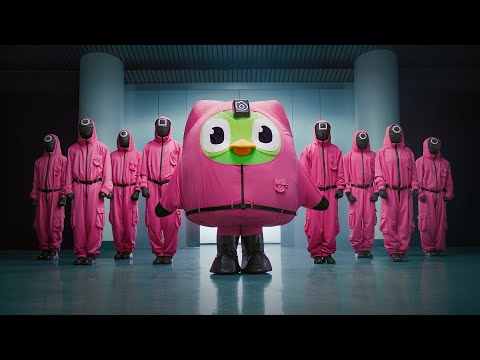
The Super Bowl Ad That Cost $7 Million and Said Nothing
Every year, brands spend more on 30 seconds of airtime than most companies earn in a decade. The ones that work and the ones that vanish share a pattern nobody wants to admit.
The price of a 30-second Super Bowl spot in 2025 was $7 million. That's just the airtime. Add production costs — director fees, celebrity talent, visual effects, licensing — and the total investment for a single ad easily crosses $15 million. For a 30-second spot during a football game.
Brands pay this because the Super Bowl remains the last mass-media moment. The 2025 game drew 123.4 million viewers, according to Nielsen. No other American broadcast comes close. In a media landscape fragmented into a thousand streaming apps and social feeds, the Super Bowl is the only time a brand can reach a third of the country simultaneously.
But here's the question nobody in advertising likes to answer honestly: does it work?
The Measurement Problem Nobody Admits
The Super Bowl ad industry runs on a specific kind of self-deception. Every year, USA Today publishes its Ad Meter rankings. Social media erupts with hot takes. Marketing publications write breathless recaps. And brands cite "impressions" and "social mentions" as proof of ROI.
Impressions are not ROI. Social mentions are not ROI. ROI is revenue attributable to the ad, and almost no Super Bowl advertiser measures that rigorously.
A 2023 study from the Stanford Graduate School of Business analyzed 15 years of Super Bowl ad data and found that the average Super Bowl spot generates a 1.2% sales lift in the four weeks following the game. For a $15 million all-in investment, a brand would need baseline monthly revenue of roughly $1.25 billion for that 1.2% lift to break even on the ad spend alone.
That math works for Budweiser. It works for Doritos. It does not work for the crypto startup that spent its entire marketing budget on a QR code bouncing around the screen.
Coinbase did exactly that in 2022. The QR code ad was called brilliant at the time — it crashed the Coinbase app from traffic. But within 18 months, the company had laid off 20% of its workforce and the crypto market had collapsed. The Super Bowl ad didn't cause the layoff, but it certainly didn't prevent it. Brand awareness without product-market fit is just expensive noise.
The Ads That Actually Worked (and Why)
Not every Super Bowl ad disappears by Monday morning. Some create lasting brand equity. They share three characteristics.
They communicate a single idea. Apple's "1984" ad didn't explain the Macintosh's technical specs. It communicated one idea: Apple is the alternative to conformity. The ad aired once during the Super Bowl and has been studied in marketing classrooms for 40 years. One idea, perfectly executed.
Budweiser's Clydesdale ads work on the same principle. They don't sell beer. They sell a feeling — warmth, nostalgia, Americana. Every Clydesdale spot since 2002 has followed this formula. Viewers consistently rank them among the top Super Bowl ads each year, and Budweiser has maintained its position as the top-selling beer in the United States despite losing market share to craft breweries and hard seltzer.
They match the moment. Google's "Loretta" ad in 2020 — an elderly man using Google Assistant to remember details about his late wife — aired during a cultural moment when the audience was primed for sentimentality. It won the USA Today Ad Meter and generated the highest positive sentiment score of any Super Bowl ad that year, according to Ace Metrix.
By contrast, brands that ignore the cultural moment often stumble. Multiple companies pulled lighthearted ads from the 2021 Super Bowl broadcast because the tone felt wrong during an ongoing pandemic. Reading the room isn't a creative skill. It's a strategic necessity.
They create long-term brand assets. The GEICO gecko. Progressive's Flo. The Dos Equis "Most Interesting Man in the World." These aren't just ads — they're characters that persist across years and campaigns. The Super Bowl spot becomes a launch event for an asset that generates value for a decade.
Brands that treat the Super Bowl as a one-off stunt rarely see lasting returns. The ones that use it to introduce or reinforce a long-term brand asset consistently outperform.
The Celebrity Trap
The 2025 Super Bowl featured more celebrity appearances than a red carpet event. Celebrities have become the default creative strategy for Super Bowl advertisers, and the data suggests it's a mistake for most brands.
Kantar's analysis of Super Bowl 2024 ads found that celebrity-driven spots scored 15% lower on brand recall than non-celebrity spots. The reason is straightforward: viewers remember the celebrity, not the brand. When Ben Affleck appears in a Dunkin' ad, people remember Ben Affleck. When a Clydesdale horse trots through snow, people remember Budweiser.
The exception is when the celebrity and the brand are genuinely connected. Matthew McConaughey's Lincoln ads worked because his persona — laconic, philosophical, slightly weird — matched the brand positioning Lincoln was trying to build. Ryan Reynolds' Mint Mobile ads worked because he was an actual owner of the company. The connection felt authentic.
But most Super Bowl celebrity appearances are transactional. A brand pays $5 million for a famous face, the celebrity shows up for a half-day shoot, and the viewer's brain files the result under "celebrity" rather than "brand." According to the Ehrenberg-Bass Institute, the single strongest predictor of ad effectiveness is distinctive brand assets — logos, colors, characters, sounds. Celebrities are, by definition, someone else's brand asset.
What $7 Million Buys You (and What It Doesn't)
Here's the honest calculus of Super Bowl advertising.
What it buys:
- Mass reach in a single moment (100M+ viewers)
- Cultural relevance for the week following the game
- PR and earned media amplification (every ad gets reviewed, ranked, discussed)
- Internal morale boost (employees get excited seeing their company on the big stage)
- Retail and distribution leverage ("as seen in our Super Bowl ad" opens doors with buyers)
What it doesn't buy:
- Customer acquisition at an efficient cost
- Measurable, attributable revenue impact
- Long-term brand equity (unless the ad introduces a lasting asset)
- Product understanding (30 seconds isn't enough to explain anything complex)
- Customer retention or loyalty
The brands that get the most from Super Bowl advertising are the ones that already have massive distribution and awareness. For them, the Super Bowl reinforces existing brand salience. It's the difference between lighting a fire and throwing gasoline on one that's already burning.
For smaller brands, the Super Bowl is almost always a bad investment. The $15 million total cost would buy a year of digital marketing, a full content operation, or product development that actually improves the thing being sold.
The Rise of the Anti-Super Bowl Campaign
Increasingly, smart brands are finding ways to capitalize on Super Bowl attention without paying for the airtime.
Liquid Death's "banned" ad strategy is one example — create a controversial ad, submit it knowing it'll be rejected, then release it online with the headline "Too dangerous for the Super Bowl." The media covers the rejection. Social media shares the controversy. The brand gets Super Bowl-level attention at a fraction of the cost.
Volvo ran a similar play in 2015. During the Super Bowl broadcast, the company launched a Twitter campaign encouraging viewers to tweet about a Volvo during any competitor's car commercial for a chance to win a new car. The campaign hijacked millions of dollars in competitor airtime at the cost of one vehicle.
T-Mobile has repeatedly teased Super Bowl campaigns on social media in the days before the game, generating coverage and conversation before the broadcast even begins. By the time the actual ad airs, it's reinforcing attention that already exists.
These strategies work because the Super Bowl's value isn't the broadcast. It's the cultural conversation around the broadcast. And you can participate in that conversation without writing a $7 million check.
The Uncomfortable Truth
The Super Bowl ad industry persists because of two forces that have nothing to do with marketing effectiveness.
First: ego. CMOs want their brand on the biggest stage. CEOs want to watch their ad during the party. Board members want to text congratulations. The Super Bowl ad is, for many companies, as much an internal political tool as an external marketing one.
Second: the measurement gap. Because Super Bowl ad impact is so difficult to attribute precisely, it's equally difficult to prove that the money was wasted. The ad generated 500 million impressions. Was that worth $15 million? Nobody can say definitively yes or no, so the spending continues.
This isn't cynicism. It's a structural reality of brand advertising at scale. The Super Bowl will remain the premier advertising event in America because it delivers something that no other channel can: a single moment when the entire country is watching the same screen. That has real value.
But $7 million for 30 seconds also has real consequences. And the brands that thrive aren't the ones that spend the most on the spot. They're the ones that know exactly what they're buying — and what they're not.
 Advertisement